Marketing Audit vs. SEO Audit vs. Website Audit: Which One Does Your Business Need?
What an SEO audit, a website audit and a marketing audit each check, what they ignore and what they cost, and how to tell which one your business needs.

Table of Contents11 sections

One agency quotes you an SEO audit, another a website audit, a third a marketing audit. The three quotes look nothing alike, and the names don't help.
The short version: an SEO audit checks whether people find you in search. A website audit checks whether your site turns visitors into enquiries. A marketing audit follows the customer from the first search to the booking, including everything off your website.
I sell the third one, so you know where I stand. I'll still tell you when one of the other two fits better, or when you don't need an audit at all.
No time or patience for the whole article? If someone is offering you an audit and you just need a quick guide, skip to what to ask for before you pay: eight questions to ask before the audit starts, then check again when the report arrives.
Picture a clinic that pays for a clean technical SEO report. Every fix in it is right. But nobody answers the clinic's WhatsApp after 6pm, so it keeps losing the same patients.
The audit was fine. It looked in the wrong place.
So start with the break: the point where your customers drop out. Then pick the audit that looks there.
Key Takeaways
- Each audit answers one question. SEO: are you found? Website: does the site turn visitors into enquiries? Marketing: where do you lose customers between the search and the booking?
- Most of a local customer's path happens off your website, on Maps, in your reviews, on Instagram and in WhatsApp. SEO and website audits both start from the site.
- You can find the leak yourself in 15 minutes with your phone and five checks, before you pay anyone.
- A free crawler scan can't send you a message, read your review replies or ask ChatGPT about you. Those checks need a person.
- Ask for a sample report before you pay. If a provider won't show you one, keep looking.
Marketing vs SEO vs Website Audit
If you've met all three before, skip to the table.
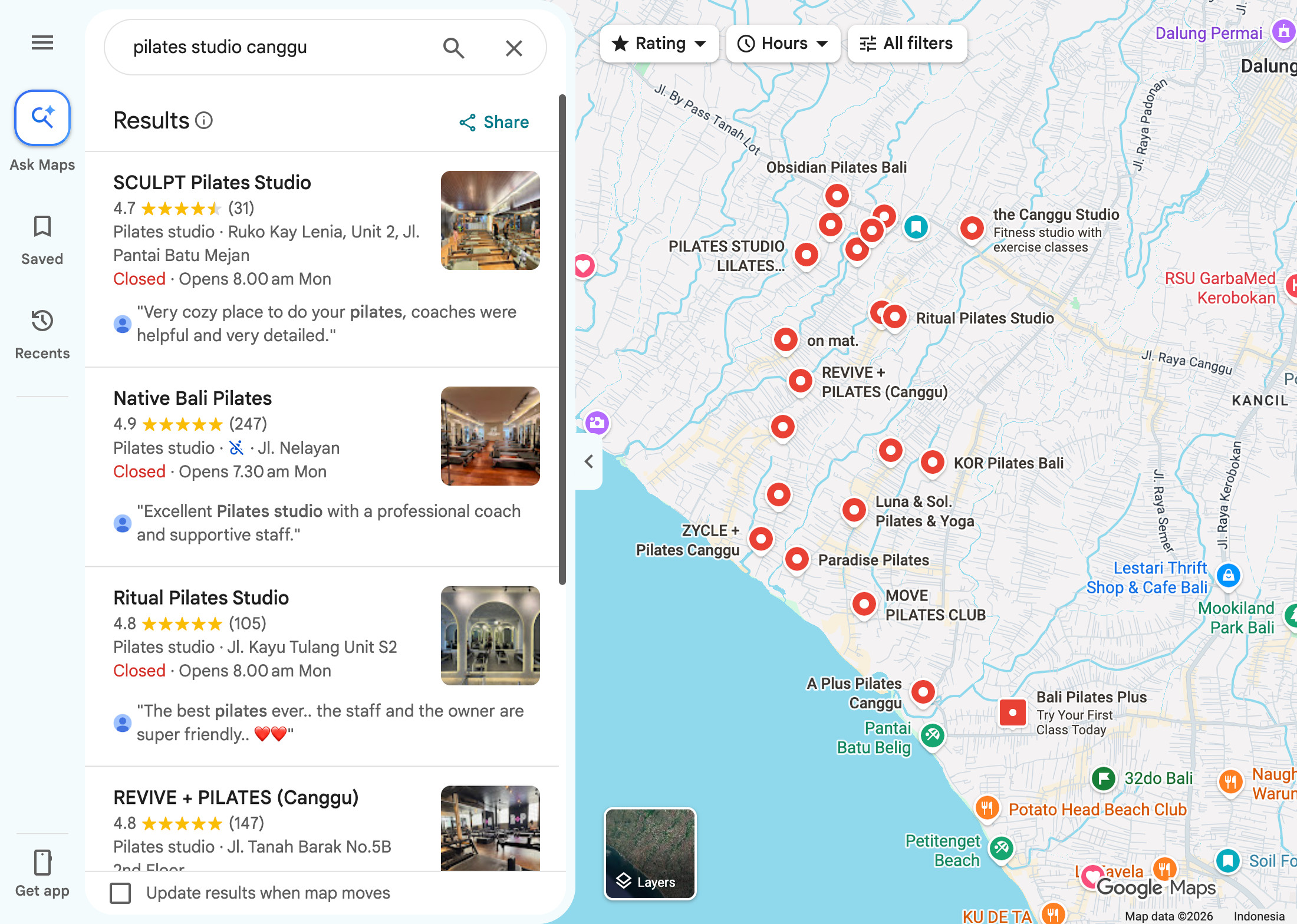
A marketing audit walks the whole path a customer takes before they book. Maps, reviews, the website, Instagram, the WhatsApp reply: it checks every place they meet you, starting with a map like the one above, where you sit next to twenty others.
You get one list of where you lose people, ranked by what each loss costs you, so you know which fix to pay for first and which one can wait a month.
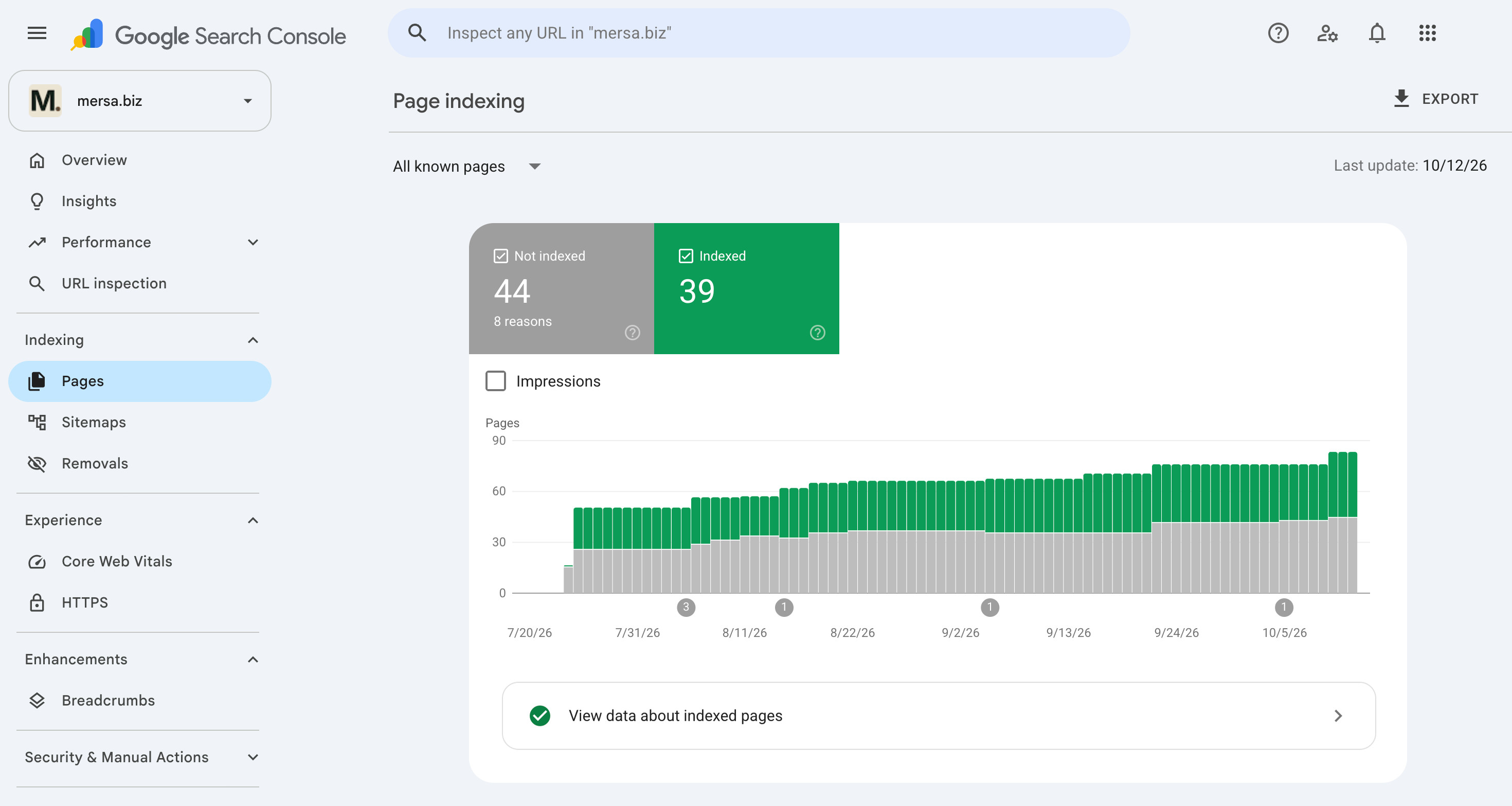
An SEO audit checks whether search engines can find, read and rank your website: crawling and indexing, page titles, speed, structured data, your content against what people search, and the links pointing at you. Most start in Google Search Console, which shows the pages Google indexed and the ones it left out, then run a crawler such as Screaming Frog over every page.
That report above is my own site's. Grey isn't always bad: redirects and duplicates are meant to stay out of Google.
Then there's the local SEO audit, which adds your Google Business Profile and directory listings.
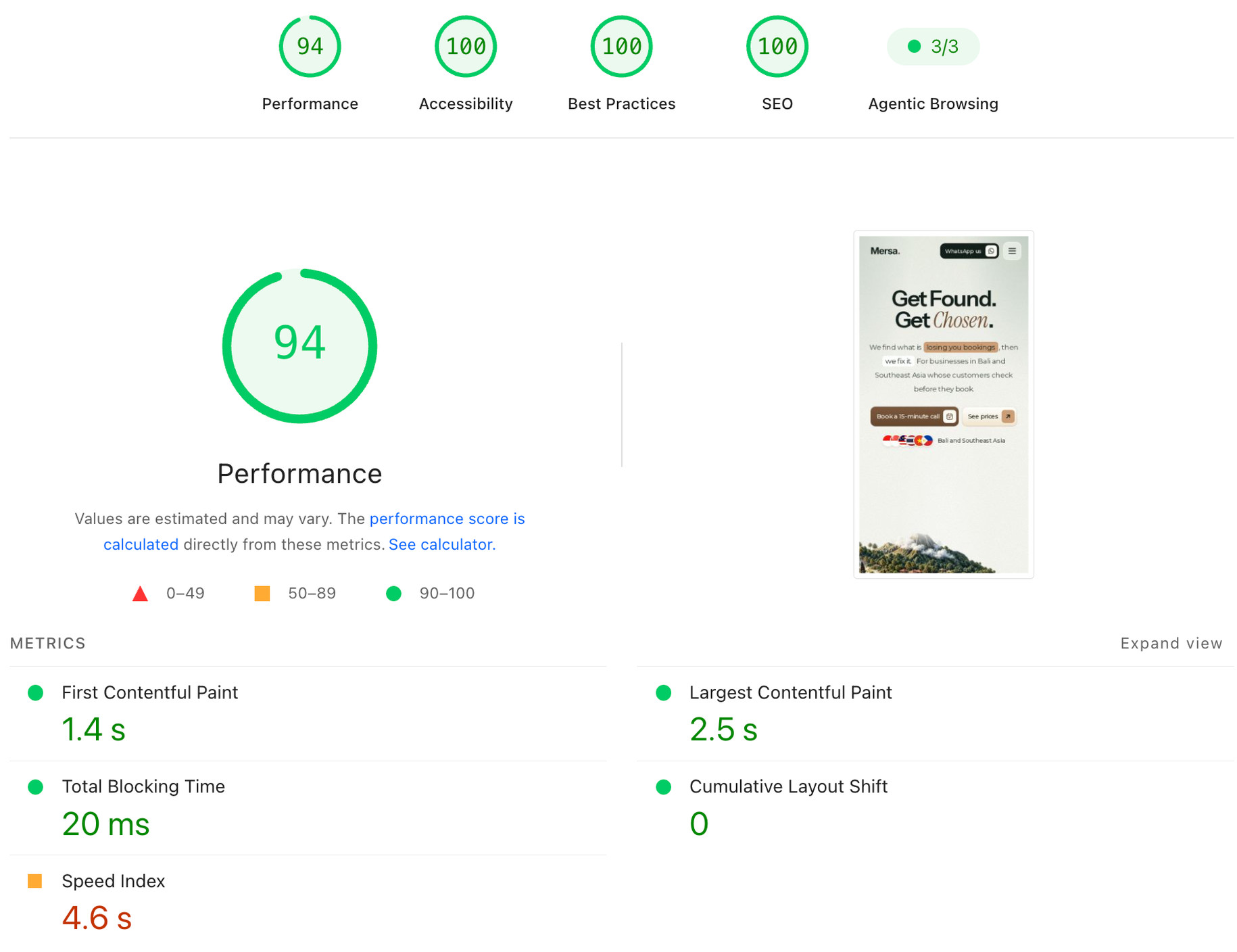
A website audit tests the site the way a visitor uses it, on a phone, all the way to the booking button. Some include basic SEO. Many don't.
Most people think there are magic ways to raise a page's conversion rate. I'm not going to lie, some techniques matter: the CTA above the fold, the right storytelling journey for the page's goal, and of course the UI and UX.
But when you audit a website that already brings in leads, it's very hard to point at a design or a feature and say it's absolutely f*cking bad and has to change. The client won't like it, and it isn't true either. The website is working.
You'll see landing pages so bad you'd ask who made this garbage, and they still bring in leads, while a beautiful new site with a perfect 100 on every PageSpeed score gets none. So there's a fine line in a website audit, and you have to find it before you critique a page that already makes money.
| SEO audit | Website audit | Marketing audit | |
|---|---|---|---|
| The question it answers | Can people find us in search? | Does the site turn visitors into enquiries? | Where do we lose customers, from search to booking? |
| What it checks | Crawling, indexing, titles, speed, structured data, content against searches, links | Mobile speed, navigation, service pages, forms and booking buttons, accessibility, security | Search and Maps, business profile, reviews, website, social, messaging and booking, enquiry tracking, competitors |
| What it usually ignores | Reviews, Instagram, how fast you reply, whether the visitor books | How people find you, and everything that happens off the site | Deep technical SEO, such as a site migration or crawl problems on a large site |
| What you get | A list of technical and content fixes, often a tool export with notes | Usability and conversion fixes, sometimes screen recordings of real visits | One ranked list of fixes across every channel |
| Who usually does it | An SEO specialist or agency | A web designer, UX or conversion specialist | A marketing consultant or agency |
Read the "ignores" row twice. That's the part nobody puts in a sales page.
An SEO audit can sit inside the other two, so they overlap more than the names suggest. Still, an SEO audit and a website audit both start from your website, and that's their blind spot. For a local business, most of the path never touches the website at all.
So Why Did They Book the Other Place?

Think about the last thing you booked in Canggu. You searched on your phone, opened the map and tapped the two or three names with the best stars. You read the newest reviews, checked their Instagram, sent a WhatsApp, then waited.
That's three steps. You found them, you chose one, you booked. Here's how far each audit follows you along them:
| What the customer does | SEO audit | Website audit | Marketing audit | |
|---|---|---|---|---|
| Found | Searches Google and Maps, asks ChatGPT | Yes, and Maps only if it's a local SEO audit | No | Yes |
| Chosen | Reads reviews, scrolls Instagram, opens the service page | The service page | The service page | Yes |
| Booked | Taps the booking button or sends a WhatsApp, waits for the reply | No | The booking button | Yes, down to how long the reply took |
Found
Found means you show up when someone looks: in Google, on the map, in directories, and now in the answers ChatGPT and Gemini give. On the map, your Google Business Profile does more of the work than your website. The categories, the photos and the hours all count (what moves the map pack, with dental practices as the example).
A local SEO audit covers this step. A technical one only covers the website's share of it.
Chosen
Choosing takes about a minute, and most of it happens away from your site. People check these, roughly in this order:
- The star rating and how many reviews sit behind it
- The date of the newest review, and whether you replied
- Your Instagram, to see the room, the team and whether it looks alive
- Who actually does the work: the dentist's name, the instructor's training
- The service page, if they open your website at all
A 4.8 ⭐ whose last review is from March looks closed to me. I'd tap the 4.6 ⭐ with last week's review.
There's one thing that decides whether someone finally buys, books or turns up, whether it's your barber, the restaurant for that one meal or even a gaming café. It's called a trust signal.
You can have the best marketing funnel set up to reach the customer the fastest way possible, and they'll still choose someone else. Time fixes this, along with the good effort you put into satisfying customers and asking them for a favour: a good review on your Google Business Profile, or on Trustpilot and other platforms for some businesses.
So before you question your strategy, design or performance, or even lower your ✌️ premium price ✌️ to have more customers, look at what some audits don't count, and what AI misses when you ask it to audit you. Where people compare, not having enough trust signals can be one of the main reasons you get no customers even when there's demand.
Booked
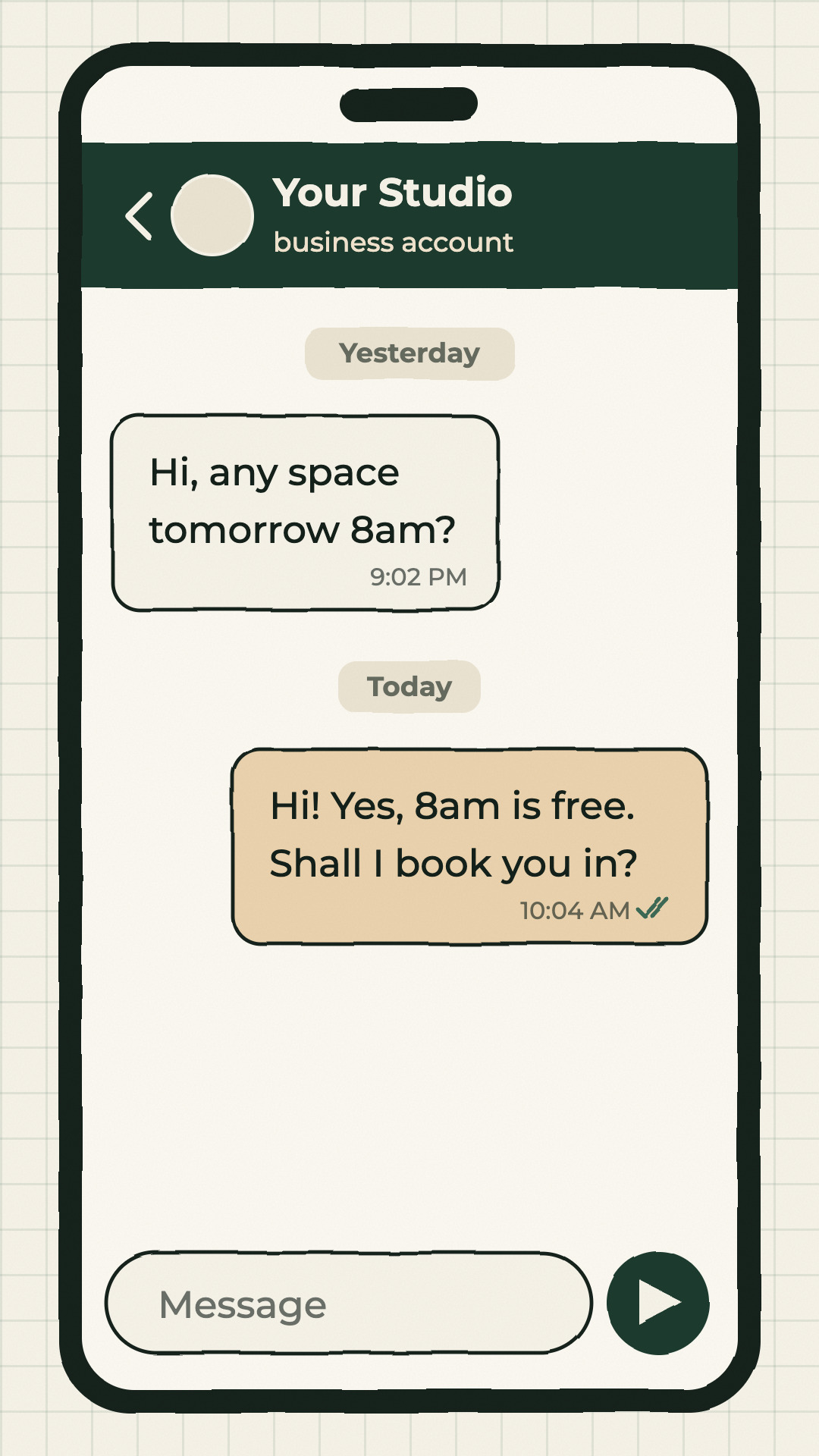
Booked is the shortest step, and the quietest leak. Someone sends "hi, any space tomorrow 8am?" at 9pm. If the answer comes at 10 the next morning, they booked somewhere else at 9:05, with the studio that replied in five minutes, and nothing in your analytics, your inbox or your booking system shows it ever happened.
If you run a clinic or a studio, this is the line to remember: an enquiry nobody answers looks exactly like an enquiry that never came.
An automatic greeting doesn't answer anyone. In working hours, while people are still choosing, a real reply that takes ten minutes is long enough to send them to whoever writes back first.
Then there's the other half of booked. When someone does book, can you tell whether they came from Maps, Instagram or a friend? Of the three, only a marketing audit checks this. Ask your front desk about last week's bookings. If they have to guess, that's a leak.
Do It Yourself First, During Lunch
You don't need to hire anyone for the first look. You need your phone and a private browser tab. Do it as a stranger would, not as the owner who knows where everything is.
It only takes 15 minutes, and you can do it while you're having lunch (about one plate of nasi goreng). I know it's hard to skip your doom scrolling while you eat 😊, but it's going to save you a lot of money.
- Ask Google and ChatGPT what a customer would ask, as a whole question, not "pilates canggu". Count how many businesses come up before you. Ask from where your customers stay: Google ranks the map partly by distance, so from your front desk you'll look higher than you are.
- I want to sign up for a pilates package and I live in Canggu. Can you recommend the best studios?
- My tooth hurts and I'm in Seminyak. Which dentist is open right now and not too expensive?
- Open your profile as if you'd never heard of the place. When was the last review, and did anyone answer it?
If your staff or marketing team answered the review, how was the reply? Did it encourage the customer to do something, or did someone read it and answer honestly? Or did they screenshot it, paste it into a new ChatGPT chat with no context and send back a generic reply full of em-dashes 😂 (thank God we have Opus 5.5).
- Try to book. Count the taps from the profile to a confirmed time.
- Send your own business a WhatsApp after 8pm, from a number your team won't recognise. Something plain, like "hi, how much is a first visit?", then time the reply. This is the only check that takes a whole night.
One of our clients, a laundry, had the same issue. When a message came in, the cashier or whoever was answering customers was busy with the job, so sometimes they missed it, and it took five or ten minutes before anyone checked.
So on their Android phone I picked a sharper notification sound, turned on vibration and the flashlight, and turned on notification reminders, so the alert repeats after two minutes if nobody has checked. Now, when you message that laundry, you see the blue ticks in less than a minute. That's partly their own SOP too, but still.
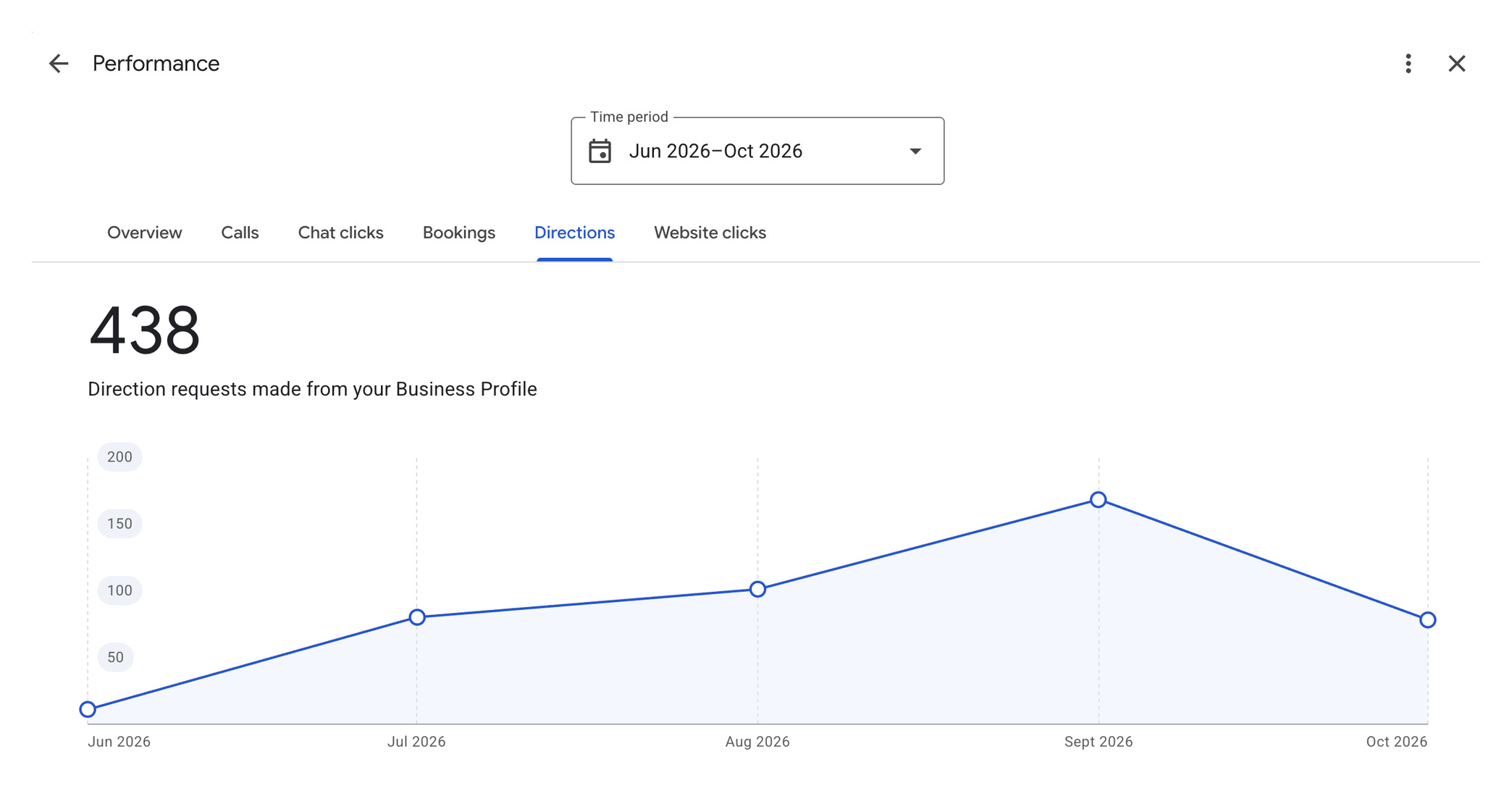
- Open the Performance tab of your Business Profile. It shows last month's calls, chat clicks, website clicks and direction requests. Put that next to the bookings you actually took. Plenty of clicks and few bookings points at Booked. Hardly any clicks points at Found.
The first check that fails is your break. If the fix is obvious, like a review nobody replied to, just fix it. If you can't see why, pay for the audit that looks at that step.
Which Audit Works for You?
Nobody wakes up wanting an audit. You notice something first: the phone is quiet, or Instagram is busy and the diary isn't. Find your sentence in the left column.
| What you notice | The audit to buy | What to look at before you pay |
|---|---|---|
| 📞 "We rank, but the phone doesn't ring" | website audit, or marketing audit if most enquiries come by WhatsApp | Check 3: the taps from your profile to a booked time |
| "We don't show up on Maps" | local SEO audit, not a technical one | Your Business Profile's categories, hours and photos |
| "Traffic fell after the redesign" | technical SEO audit | Search Console's Page indexing report, from the week the new site went live |
| 🐢 "The site is slow or breaks on a phone" | website audit | PageSpeed Insights on your busiest service page, not only the homepage |
| "Instagram is busy, bookings are flat" | marketing audit | Check 4: the WhatsApp after 8pm |
| 💸 "We spend more on ads and get the same enquiries" | marketing audit that includes the ads | Tap your own ad on a phone and try to book from where it lands |
| "Enquiries come in, but we can't say from where" | marketing audit | Check 5: the Performance tab against the bookings you took |
| "We don't know what's wrong" | marketing audit first, then a deep one where it points | All five checks, in order |
A marketing audit shows up in five of the eight rows, because most of these symptoms start off the website.
When You Can't Tell, Start Wide
Two narrow audits can both be right and still miss the leak. A studio pays for an SEO audit in March and a website audit in June, fixes every line in both, and never learns that the link in its Instagram bio still opens last year's booking page.
So go wide first. Pay for depth only where the wide audit points: if it finds Google dropped half your pages after the redesign, that's when a technical SEO audit earns its fee.
When You Don't Need an Audit
Sometimes the right answer is to keep your money.
You opened a few months ago. There's nothing to audit yet: no reviews, no search data, no booking history. Spend the money on photos and on asking your first customers for reviews.
You already know the fix. If check 2 turned up reviews nobody answered, a report will only tell you what you saw. Answer them tonight.
You can't pay for the fixes this quarter. An audit is a list of work, and it ages fast: by the time the budget arrives, your reviews, your competitors and the map have all moved, and you'd want the whole thing done again.
Same Name, Different Product
Two agencies can both quote you an "SEO audit" and send back completely different things. One sends a crawler's export with their logo on the cover. The other sends what a person found after a week inside your Search Console and your Business Profile.
Both are called an audit. Most quotes turn out to be one of three versions, whatever the label says:
| What arrives | The signs in the quote | Worth paying for when | |
|---|---|---|---|
| A tool export | The crawler's report with an agency logo on page one: hundreds of "issues", sorted by the tool, not by what they cost you | One fixed price whatever the size of your site, a count of "points checked", delivery in a day or two | Rarely. You can run the same tools yourself, free (next section) |
| A manual review | A person's findings, ranked, with the evidence behind each one | Asks for access to your Search Console or Business Profile, names who does the work, quotes days of work rather than points | You know which step breaks and need to know why |
| A strategy document | Keywords, competitors and a six-month plan | "Roadmap" and "growth plan", and a monthly retainer on the last page | Once the break is fixed |
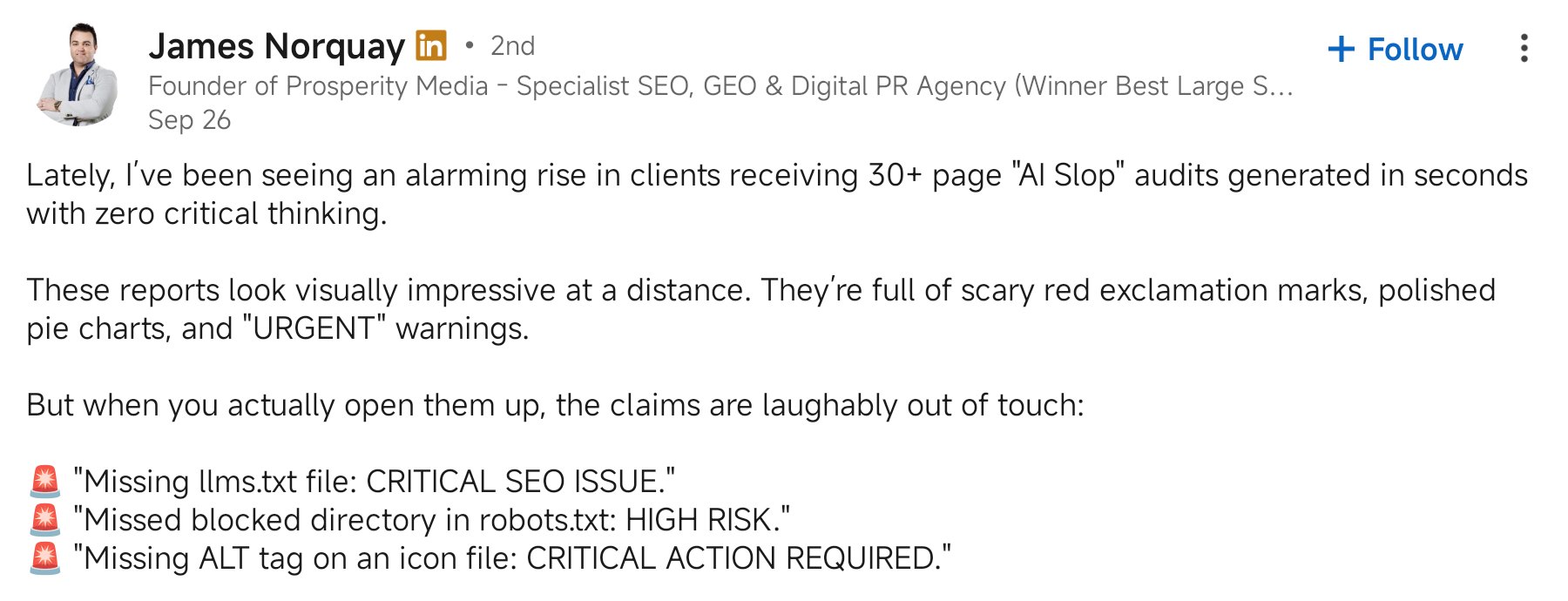
The export has a newer version now, written by AI. James Norquay, who founded the Australian SEO agency Prosperity Media, wrote in September that clients keep receiving these, and his test fits in one sentence: if the findings don't tie to revenue, search intent, site architecture or real technical blockers, "it's not an audit it's an export script".
I've written a whole post on llms.txt, and it's worth having. Nobody ever lost a booking over a missing one.
The same three versions sit behind the other two labels. A website audit can be a Lighthouse score in a PDF, and a marketing audit can be a slide of your follower counts next to a competitor's.
So read the scope line by line and skip the title. If a quote doesn't say which places get checked and who checks them, assume it's the export.
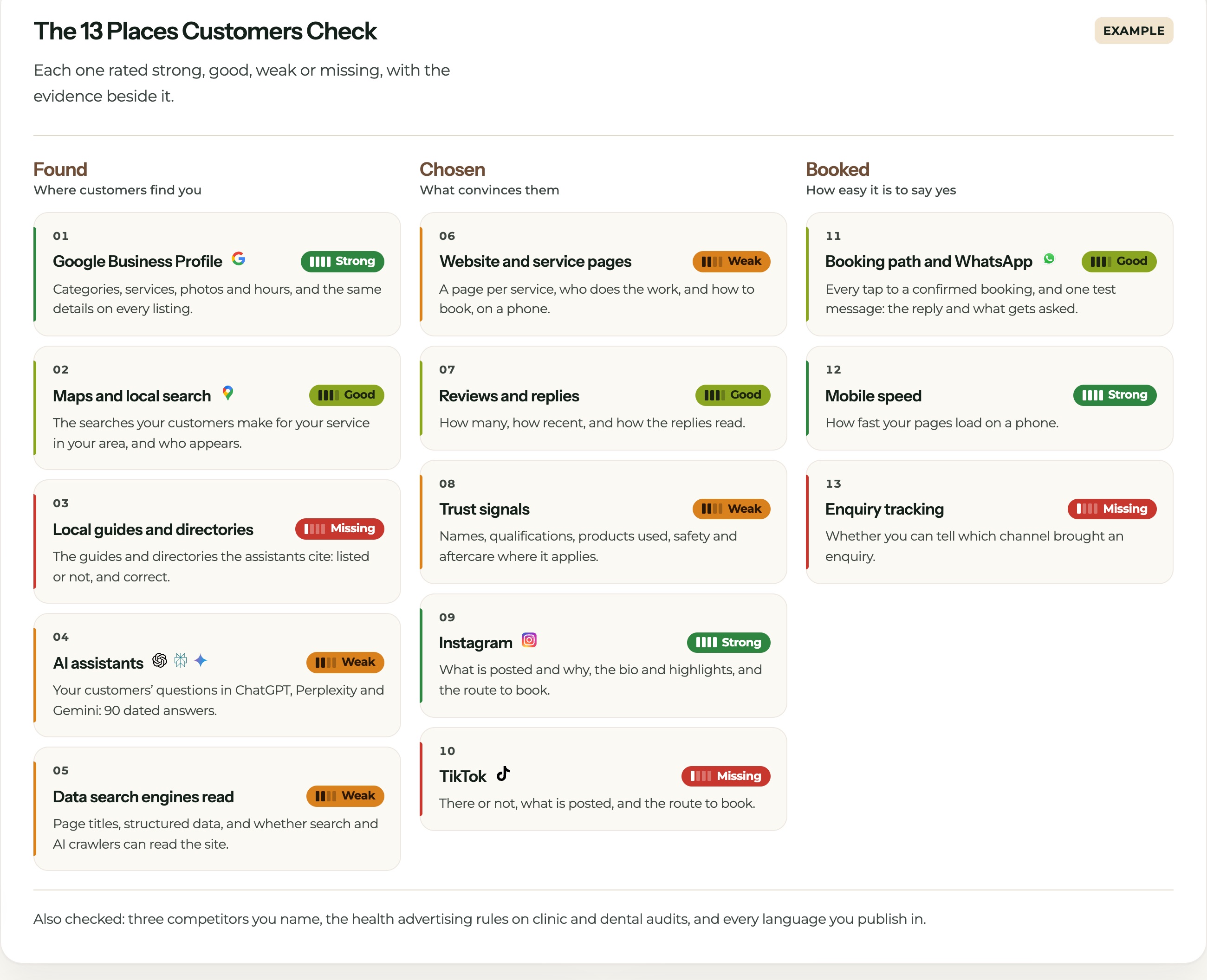
That's the scope of our own audit: the 13 places a Mersa marketing audit checks, each with one line on what gets looked at. Hold any quote you get against a list like that, whoever it comes from.
Why Free Audits Usually Suck
A free audit, like most cheap ones, is usually a crawler run over your site. The crawler opens every page the way Google's bot does and lists what's broken. It's good at that, and it stops exactly where your website stops.
Bill Hartzer, a technical SEO consultant in the US, said it more bluntly on X back in 2023:
If you're charging $100 or less or even giving them away for free, then you're NOT doing a proper SEO audit. ... It's a report from a tool. Please do yourself, your clients, and your potential clients a favor and call reports reports and audits audits.
| What a crawler reports | What only a person can check | |
|---|---|---|
| Found | Pages Google left out of its index, missing titles, broken links, slow pages, structured data errors | What ChatGPT says when someone asks it for a good physio in Ubud, and where you sit on the map from the street your customers stay on |
| Chosen | Thin or duplicate text on the service page | How your review replies read, whether your Instagram looks alive, how you compare with the studio down the road |
| Booked | Whether the booking link opens | Whether anyone answers the WhatsApp, how long it took, the taps to a confirmed time |
One of the most important things that probably no audit can capture is the way your staff talk to customers. It matters most when the sale happens in an online chat, like at a club, a gym, a studio or a local business like a laundry, and even more if you're in an area that serves a lot of tourists.
Tourists have all kinds of English skills, so at least make sure your staff can write basic English fast and efficiently. On the other hand, you don't always need AI tools to rewrite every plain reply that has warmth and heart in it into some beautiful machine-written text.
Every line on the right needs a phone and ten minutes of somebody's attention. A tool has no phone. I'd take an audit that skips half the crawler's list over one that skips the test message.
The left column you can get yourself, free, this afternoon:
- PageSpeed Insights scores one page at a time on a phone and lists what slows it down. Run it on the page your ads and your profile link to.
- Google Search Console is Google's own report on your site. Its Page indexing report, the one from my site above, is the first chapter of most technical audits.
- Screaming Frog crawls up to 500 URLs free, which covers most local businesses' sites. It finds the broken links, missing titles and redirect chains that a tool-export audit charges you for.
- The Performance tab from check 5, for the map.
Run them before you talk to anyone. When the quote arrives, you'll know which pages of it you already have.
What Each Audit Costs
An audit can cost nothing or several thousand dollars, and the range is fair once you see what it pays for: hours of a person's time. Here are the figures I could check at their source, abroad first, then in Indonesia:
| Price | What it buys | Source | |
|---|---|---|---|
| Ahrefs' survey of 439 SEO providers | US$2,501 to $5,000 is the most common project fee, charged by 21.2% of them. US$75 to $100 is the most common hourly rate | Any one-off SEO project, audits included | Ahrefs' SEO pricing survey, data from 2023 |
| Bill Hartzer | From US$1,000 for a "small" site | A technical SEO audit, at least 5 to 10 hours of work | His post on X above, 2023 |
| Australian agencies | AU$2,000 to $5,000 | A full site audit | StudioHawk and First Page, compared in what SEO really costs in Australia |
| An Indonesian agency's price guide | IDR 500,000 to 3,000,000 | On-page, technical, site structure and indexing | Optimaise, 2026 |
| Harun Studio | From IDR 2,000,000 | An on-page SEO audit run in Ahrefs and Website Auditor, with the technical fixes done | Their on-page SEO page |
| Content SEO Disini | IDR 250,000, 750,000 or 1,650,000 | A homepage check, a basic website audit, or an SEO audit of up to 3 landing pages | Their SEO page |
| Mersa | IDR 6,000,000 | A marketing audit of 13 places, in 7 working days | All our prices |
Do the sum. Ten hours at the survey's US$75 to $100 is already US$750 to $1,000, before anyone writes a page of the report. A free audit can't pay for those hours, so it's the export.
The Indonesian rows are all SEO audits of the website. None of them sends you a WhatsApp or reads your reviews, and they cost what that scope costs here.
Ours sits between the two halves of the table. It costs three or four times a local SEO audit because it covers the whole path, from the map to the reply. It costs less than the foreign ones because the scope is fixed, nothing is billed by the hour, and deep technical work like a site migration isn't in it.
Whatever the price, ask how many hours of a person it buys. If nobody can tell you, it's zero.
What to Ask For Before You Pay
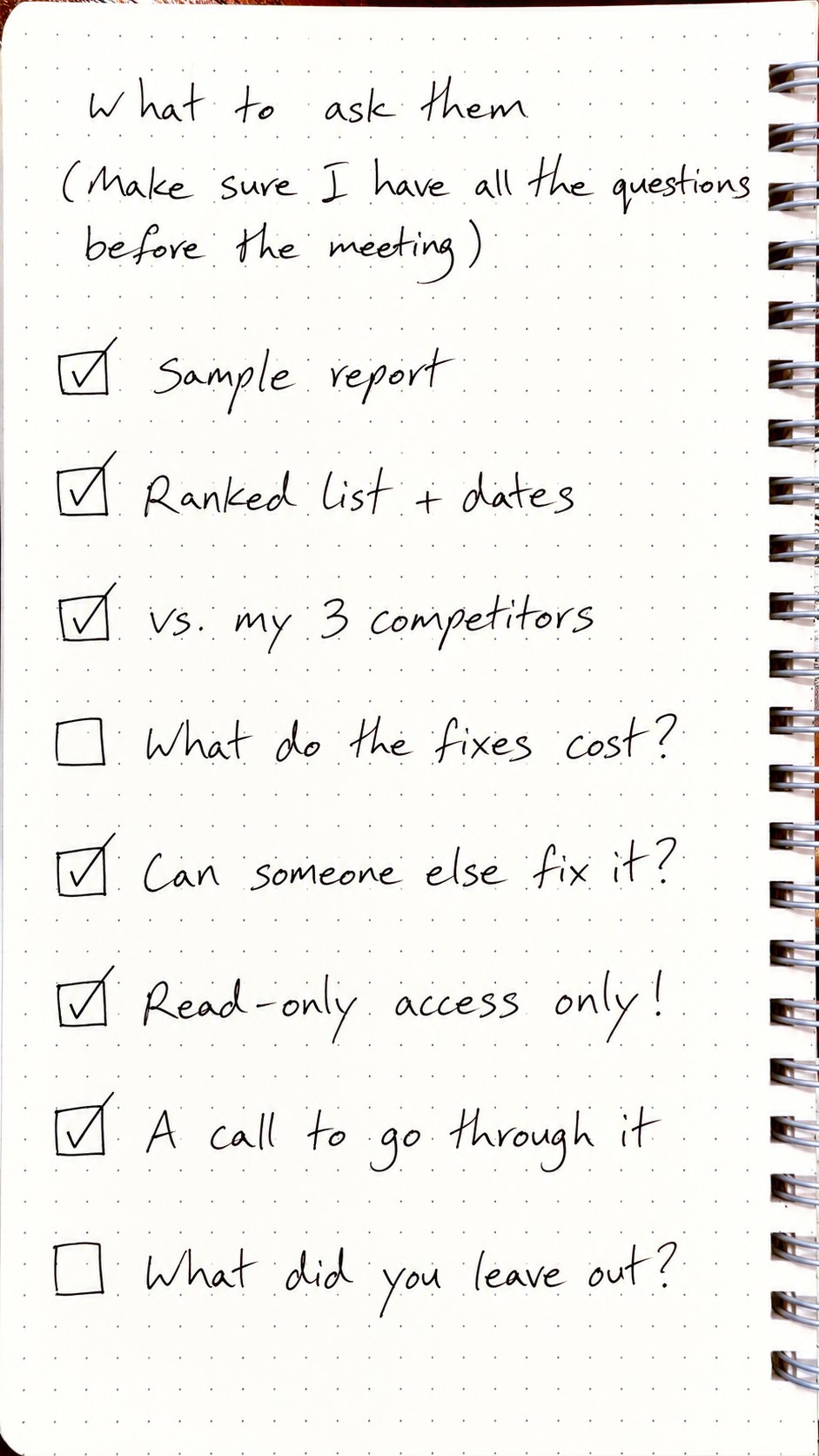
You already have three questions from above: is it a person or a tool, will they send a test message, and which places get checked. Here's the rest. Ask for them in writing before you pay, and check them again when the report arrives:
- A sample report. A real one with the name blacked out, or one made up to show the format. Either is fine. Without one, you're paying for a surprise.
- One ranked list. Each row carries the evidence (a screenshot, a count, the date it was checked), why it costs you customers, who fixes it and how you'll know it's fixed. Sixty pages sorted by the tool's own categories is the opposite.
- The competitors you name. A tool compares you with whatever sites it finds. Your customers compare you with the three places they'd go instead, so give the auditor those three.
- What the fixes cost. An audit fixes nothing by itself. If it finds twenty problems and prices none of them, you're left with a longer to-do list and no budget.
- A list someone else can follow. Your current agency, a freelancer or your own staff should be able to pick it up and do the work. If only the people who wrote it can make sense of it, it was a sales pitch.
- Read-only access. Google's own advice is to give an auditor read access to Search Console, not write access. I'd do the same with the Business Profile: a manager, never an owner.
- A call to go through it. Half an hour where you can ask "why is this one first?" is worth more than any appendix.
- What gets left out. A good audit says what it won't check before it starts, and the report says it again. "We won't look at your ads", in writing, saves an argument later.
Three things should end the conversation: a promise of first place on Google, a free audit that ends in a retainer pitch, and a long report with no order to it. I'd walk away from the first one on the spot.
If it's an SEO audit you're buying, I've written up which numbers a one-off SEO report should carry, and which ones mislead.
Where Mersa's Marketing Audit Fits
You've read my questions, so here are our own answers. A person does our marketing audit, and the test message is part of it. It checks the 13 places from the card above, sets you beside the three competitors you name, and puts 30 customer questions to ChatGPT, Perplexity and Gemini: 90 dated answers.
You get one ranked list, with the evidence and who should fix each line, and a 45-minute call to go through it. Your web person, your agency or we can do the fixes. Our sample is a made-up audit that shows the format, not a client's report.
It isn't a deep technical SEO audit. If Google dropped half your pages after a site migration, hire a technical SEO first. And if nobody will act on the list, don't buy an audit from anyone, us included.
Follow me on LinkedIn if you liked this. Fair warning: I think most SEO audits sold to small businesses shouldn't be bought.
Common Questions
What is the difference between an SEO audit, a website audit and a marketing audit for a small local business?
An SEO audit checks whether you're found in search, and a website audit whether the site turns visitors into enquiries. A marketing audit follows the whole path, from Google Maps to the WhatsApp reply, including everything off your website.
Is a digital marketing audit the same thing as a marketing audit, or does it check something different?
Usually the same thing: both cover search, Maps, reviews, social media and ads. Ask whether it includes a real test message to your business. Many digital marketing audits stop at follower counts and ad reports.
Is a free or cheap SEO audit worth it for a small business with a simple website?
Rarely. A free SEO audit is usually a crawler export, and you can run the same tools yourself, such as Screaming Frog (free up to 500 URLs) and PageSpeed Insights. Pay when search is clearly the step that's failing.
How long should a proper SEO or marketing audit take before the report is delivered?
Days, not hours. Bill Hartzer puts even a small technical SEO audit at 5 to 10 hours of work. Mersa's marketing audit takes 7 working days, then a 45-minute call. A one-day turnaround usually means a tool export.
How much does an SEO or marketing audit cost in Indonesia compared with the US or Australia?
Indonesian providers publish SEO audits from IDR 250,000 to about IDR 3,000,000. In Ahrefs' survey, the most common one-off SEO project fee is US$2,501 to $5,000, and Australian agencies quote AU$2,000 to $5,000. Mersa's marketing audit costs IDR 6,000,000.
Should a small business give an SEO agency or auditor owner access to its Google Search Console and Business Profile?
No. Google advises giving an auditor read access to Search Console, not write access. On a Google Business Profile, add the auditor as a manager and keep the owner role yourself.


